Daily Tour
1 person
English, Espanol, Francais
UNESCO Wonders • Buddhist Grottoes • Sacred Mountains • “Black Myth: Wukong” Inspired Sites
Embark on a 13-day immersive journey through Shanxi province, tracing China’s architectural evolution across 2,000 years of history. Begin in the ancient capital of Datong, where Northern Wei (386–534 AD) artisans carved devotion into stone at the Yungang Grottoes. Explore gravity-defying temples and towering wooden pagodas that inspired the world of Black Myth: Wukong, then ascend the sacred peaks of Wutai Mountain—a UNESCO sanctuary where Han-era temples meet Himalayan-style stupas.
Walk in the footsteps of Tang dynasty builders at Nanchan and Foguang Temples, home to China’s oldest wooden structures. Wander through the UNESCO-protected streets of Pingyao Ancient City, a living monument to Ming and Qing dynasty urban planning. Discover vibrant murals at Yongle Palace, marvel at the glittering glazed pagoda of Guangsheng Temple, and witness the roaring power of the Yellow River at Hukou Waterfall.
Along the way, craft shadow puppets, taste vinegar-aged delicacies, and sleep in restored courtyard mansions—immersing yourself in the living traditions of one of China’s most culturally rich regions. This journey is designed for those who seek not just to see history, but to walk through it.
Grotto Masterpieces & Gaming Inspiration
Afternoon: Arrive at Datong Airport, transfer to ancient city hotel with a stop at the Nine-Dragon Screen (Ming Dynasty, 1392) – one of China's oldest and largest glazed-tile screen walls, featuring nine vividly crafted dragons playing with pearls amid swirling clouds.
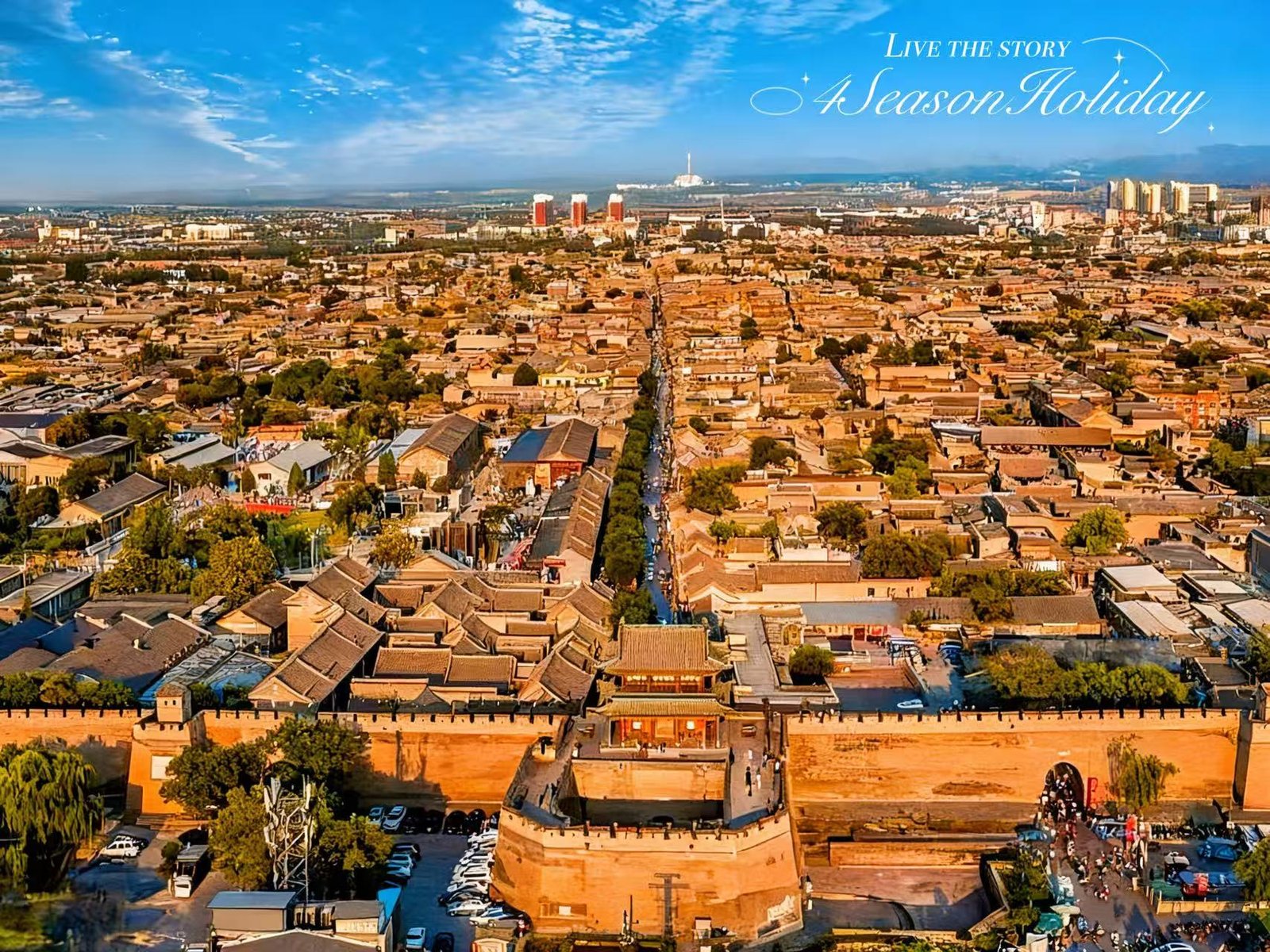
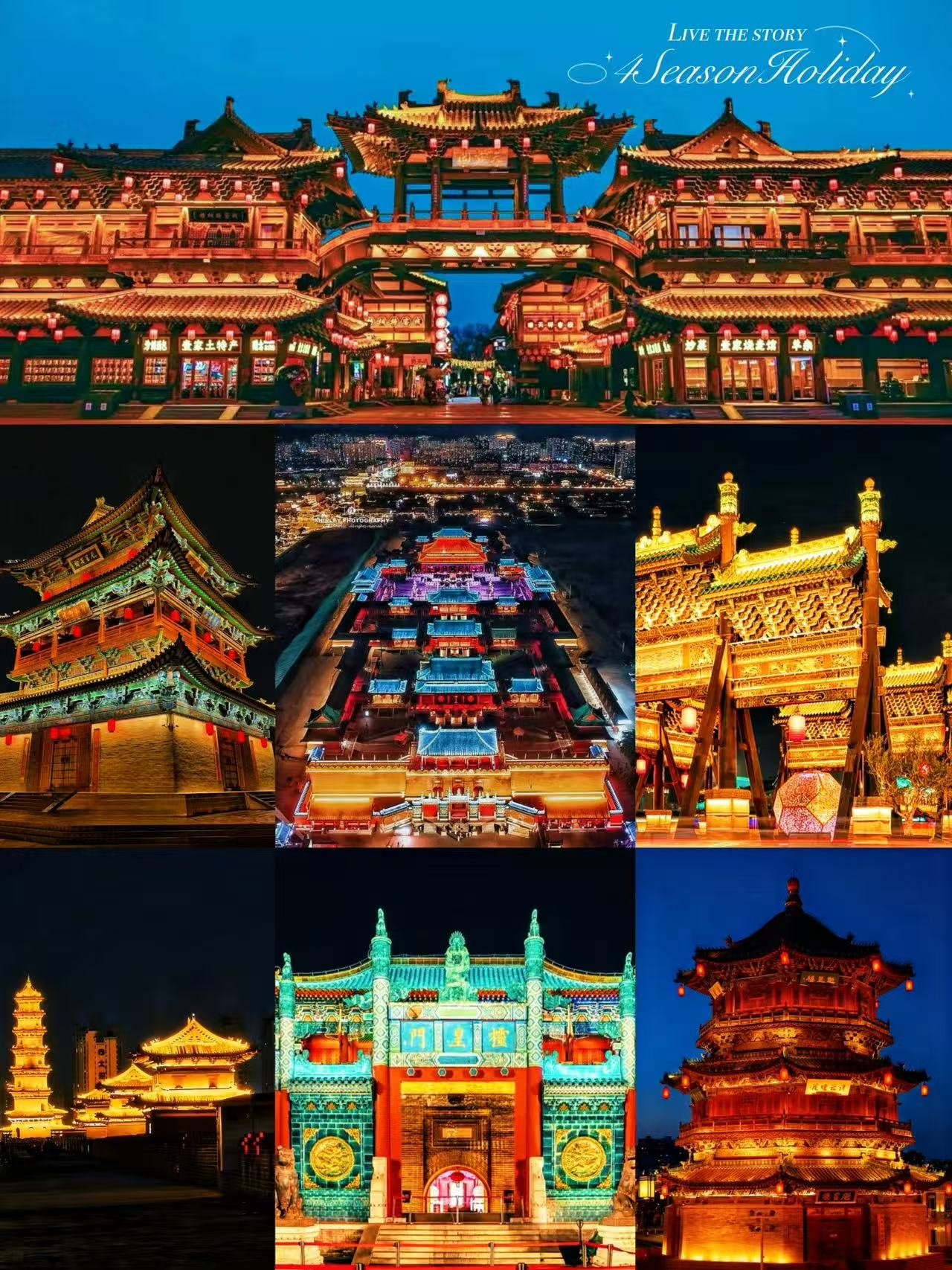
Evening: Datong Ancient City Night Tour – Explore the illuminated Ming Dynasty (1368-1644) fortifications, including the beautifully lit city walls and traditional courtyard alleys.
Night: "Wukong-Themed" welcome dinner with game-inspired culinary creations
Gaming Connection:
Datong's architecture inspired the game's ancient temple designs
Photo Tip:
The city wall's watchtowers offer perfect sunset views over historic rooftops
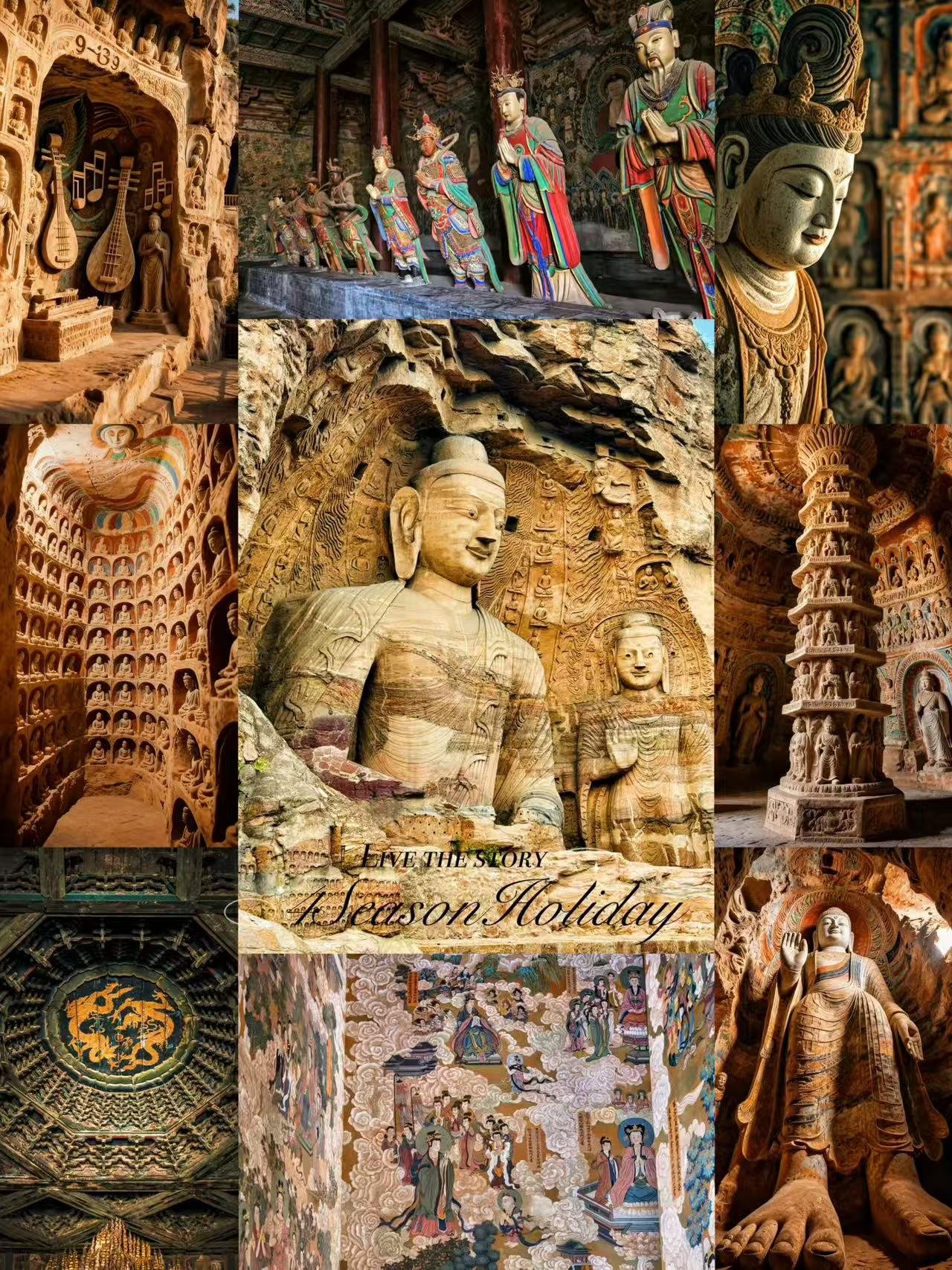
Buddhist Art & Architectural Marvels
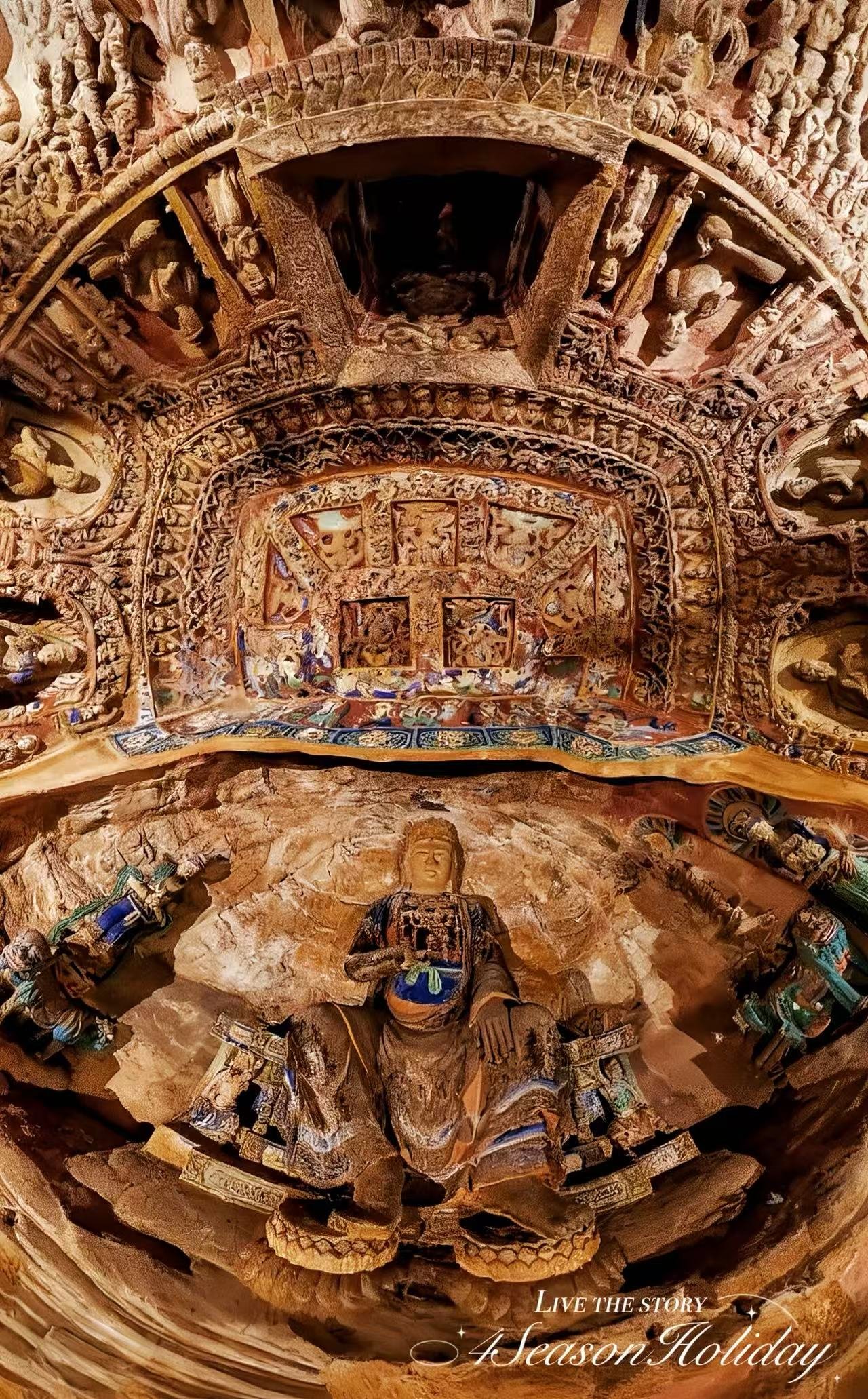
Morning: Yungang Grottoes (UNESCO, 5th century AD) - 45,000 Northern Wei Buddhist statues. Yungang represents the first peak of Chinese Buddhist art
Afternoon:
Huayan Temple - Liao Dynasty (907-1125 AD) wooden architecture masterpiece.
Shanhua Temple - Tang Dynasty (618-907 AD) murals and sculptures
Photo Spot:
The 14-meter tall seated Buddha in Cave 20 is iconic
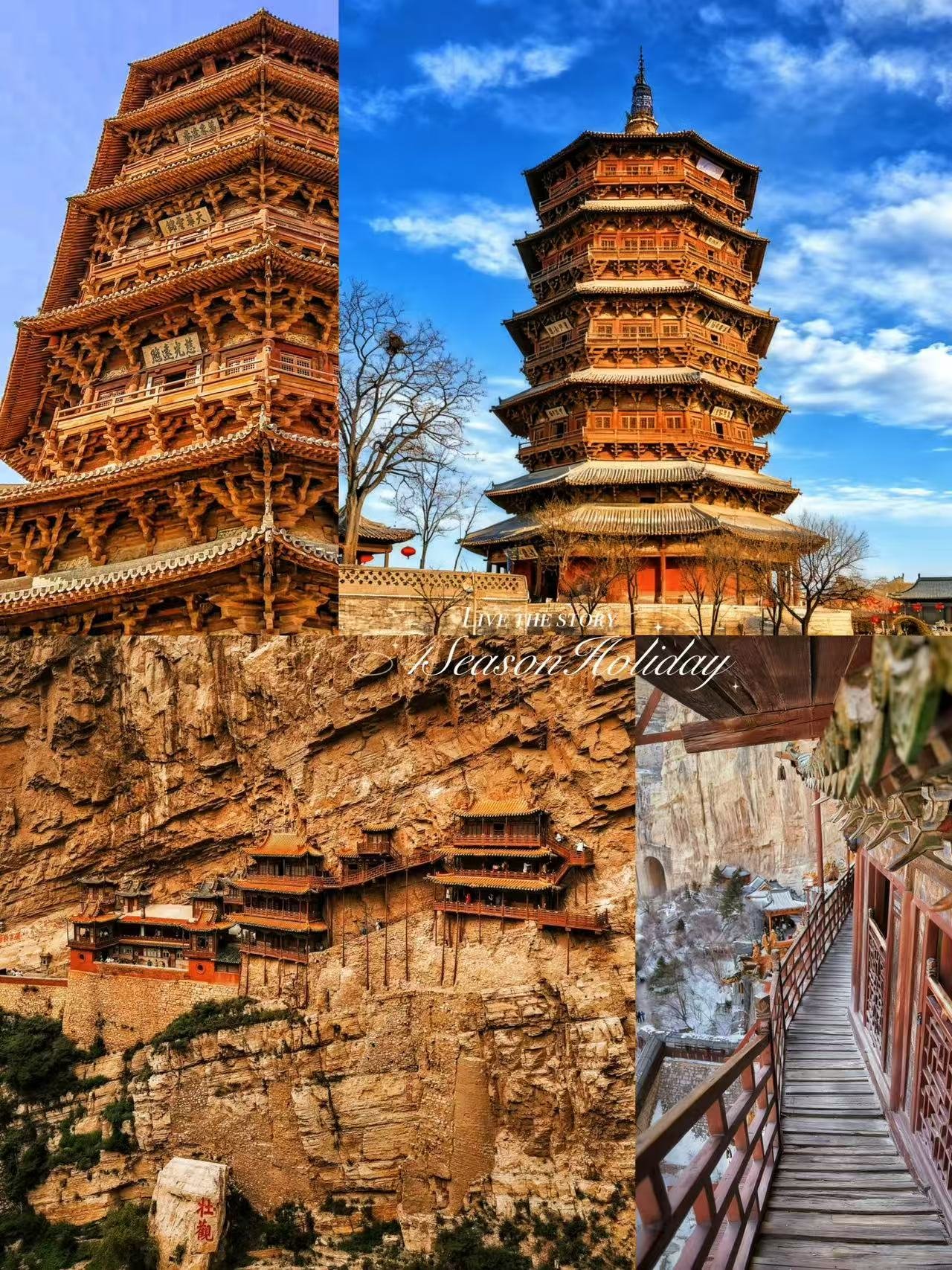
Hanging Temple & Wooden Pagoda
Morning: Visit the Hanging Temple (491 AD) – built into Hengshan Cliff, uniquely blending Buddhism, Taoism and Confucianism in its halls. Continue to Yong'an Temple (Yuan Dynasty, 1271-1368) to admire its magnificent Ming Dynasty (1368-1644) murals and ancient architectural style.
Afternoon: Explore Yingxian Wooden Pagoda (1056 AD) – the world's oldest multistory wooden structure, using 54 bracket types without nails. Then visit nearby Jingtu Temple (Jin Dynasty, 1115-1234) featuring exquisite stone carving and rare Liao Dynasty (907-1125) architectural elements.
Evening: Traditional craft workshop - wooden architecture model building
Gaming Link:
The Hanging Temple's precarious setting inspired game levels
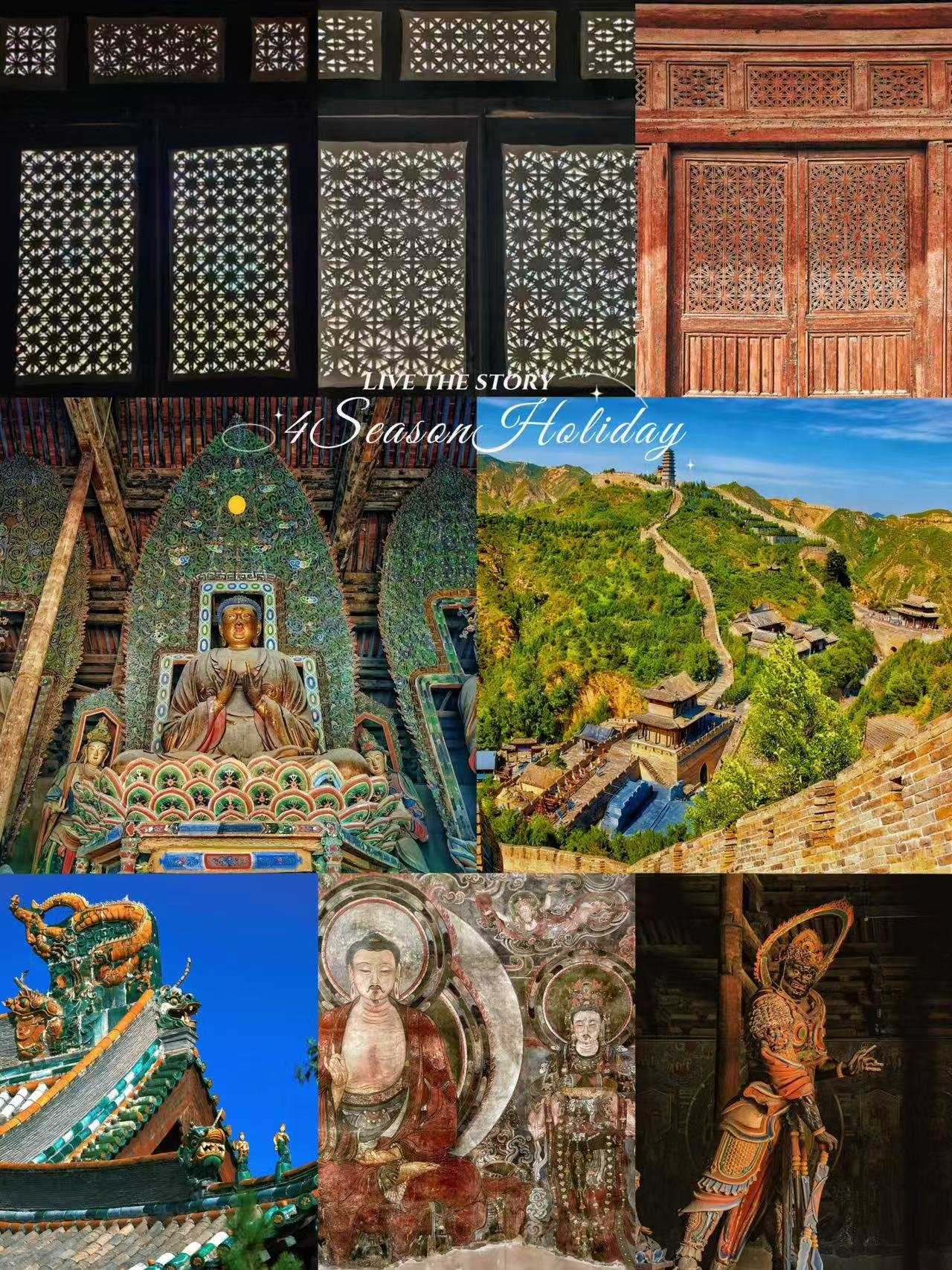
Ancient temple & Great Wall Section
Morning: Chongfu Temple, one of China's exceptionally precious surviving temple complexes from the Jin Dynasty (1115-1234), renowned for its intact structures, exquisite glazed ornaments, carvings, and murals.
Afternoon: Yanmen Pass (Ming Dynasty, 1374 AD) - walk along this strategic Great Wall section with its iconic "First Pass Under Heaven" gatehouse and panoramic northern views.
Evening: Xinzhou Ancient City (origins in Han Dynasty,202 BC-220 AD)
Wander illuminated Ming-Qing streets and sample local snacks at the vibrant night market.
Local Taste:
Try Xinzhou's famous roasted lamb and handmade buckwheat noodles.
Architecture Insights
The "Five Unique Features" of Chongfu Temple
Mituo Hall, built in 1143, is one of China's three largest and best-preserved Jin Dynasty Buddhist halls.
Glazed roof decorations are in various shapes and sizes, retain their vibrant colors despite over 800 years of exposure to the elements.
15 exquisitely carved lattice windows and doors.
Over 300 square meters of Jin Dynasty murals.
Statues tower 8 meters in height, accompanied by a 14-meter-tall mandorla (aura backdrop).
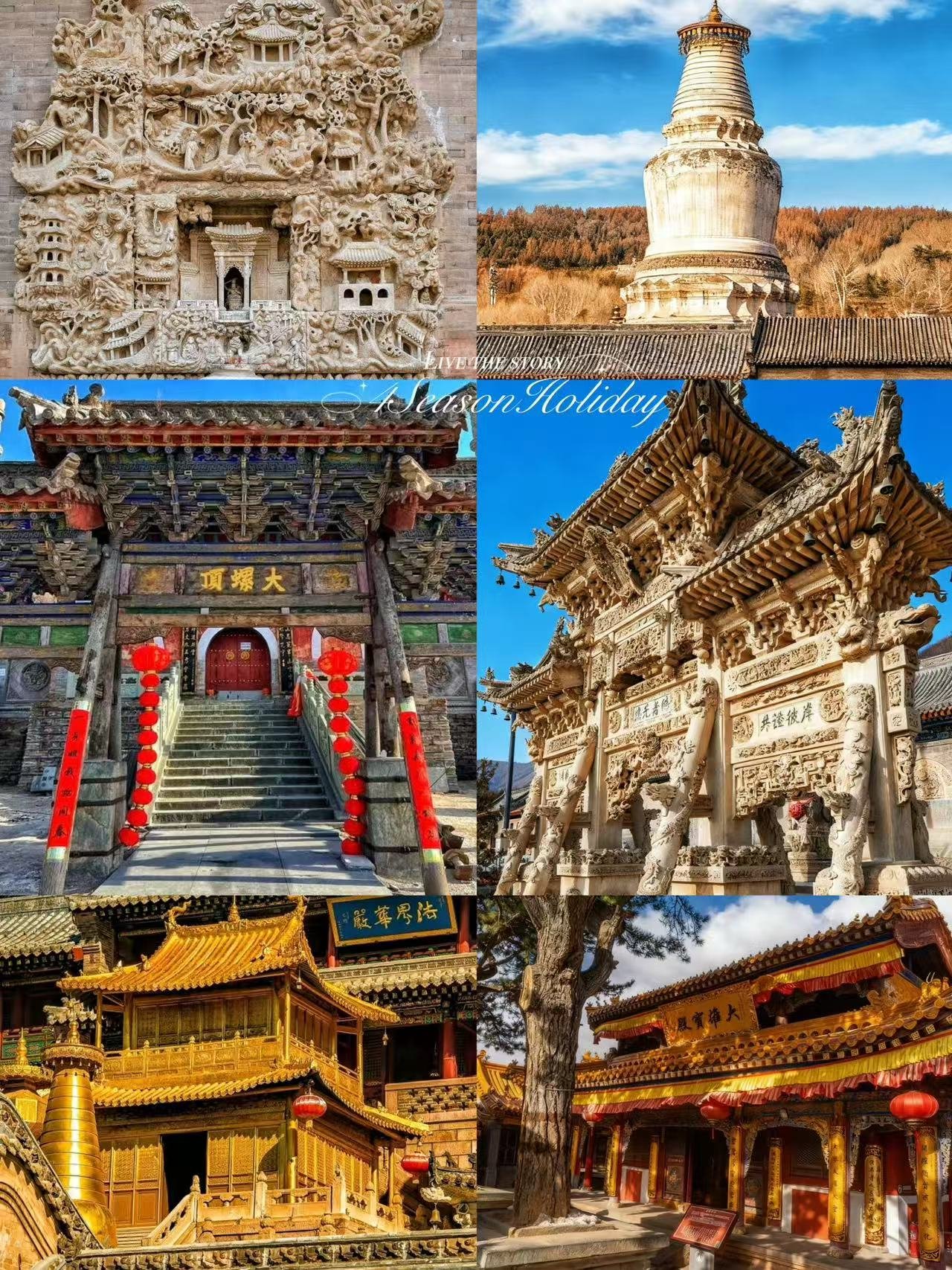
Ancient temples - UNESCO sites
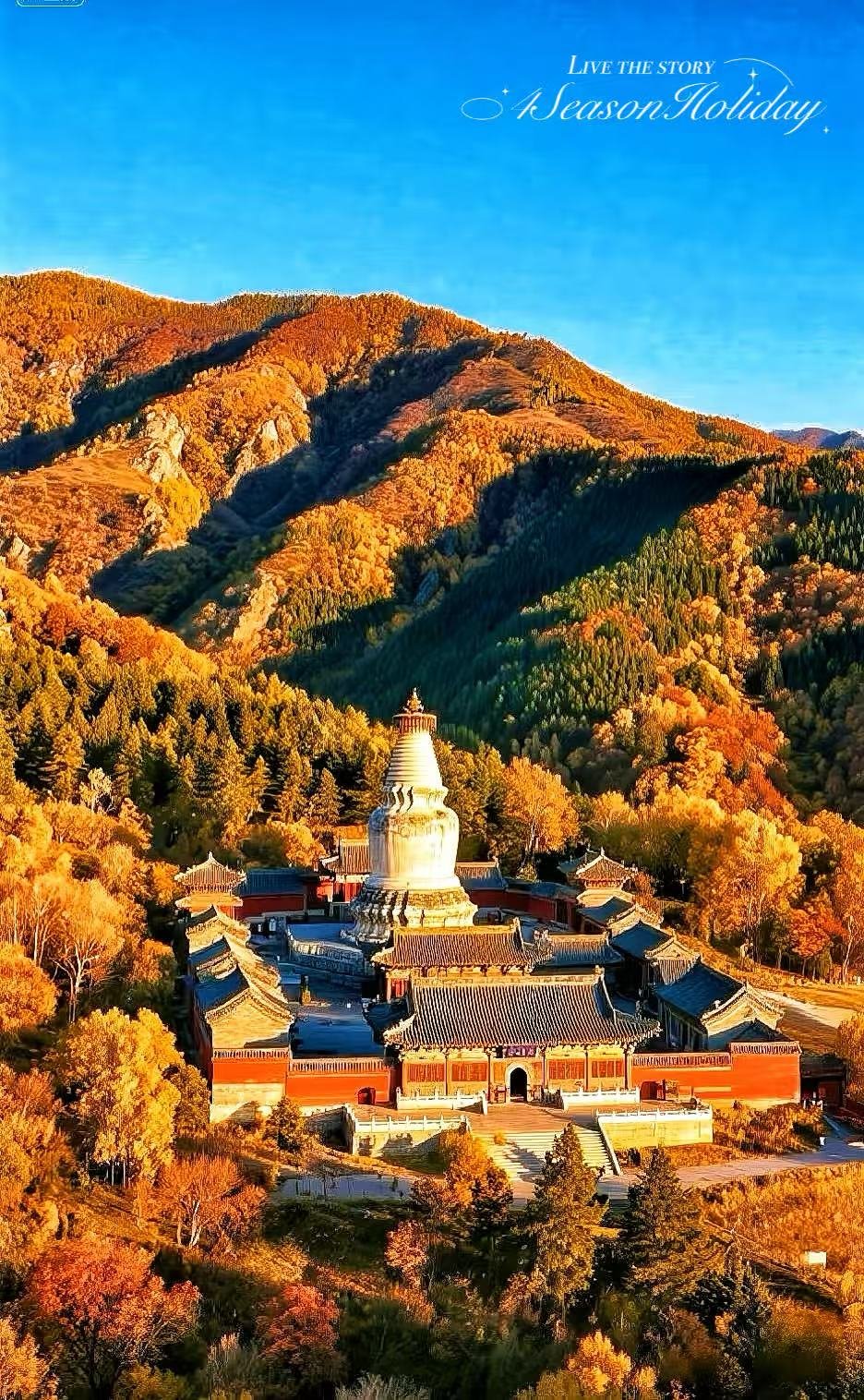
Morning: Pusa Ding (14th–20th c.) – Yellow Temple architecture & panoramic mountain views. Xiantong Temple (origin 68 AD) – Wutai's oldest temple with bronze halls & Sanskrit sutras
Afternoon: Tayuan Temple (1573–1620) – Nepal-style white stupa & relic pagoda. Dailuo Ding (15th c.) – Climb to "Little Wutai" for five-peak pilgrimage in one visit. Longquan Temple (960–1279) – Stone archways & legendary dragon spring
Pilgrim's Insight:
Dailuo Ding’s 1,080-step path symbolizes breaking 108 karmic obstacles in Buddhism.
Architectural Contrast:
Compare Han-era timber frames at Xiantong with Ming stone carvings at Longquan.
Tang Dynasty Masterpieces
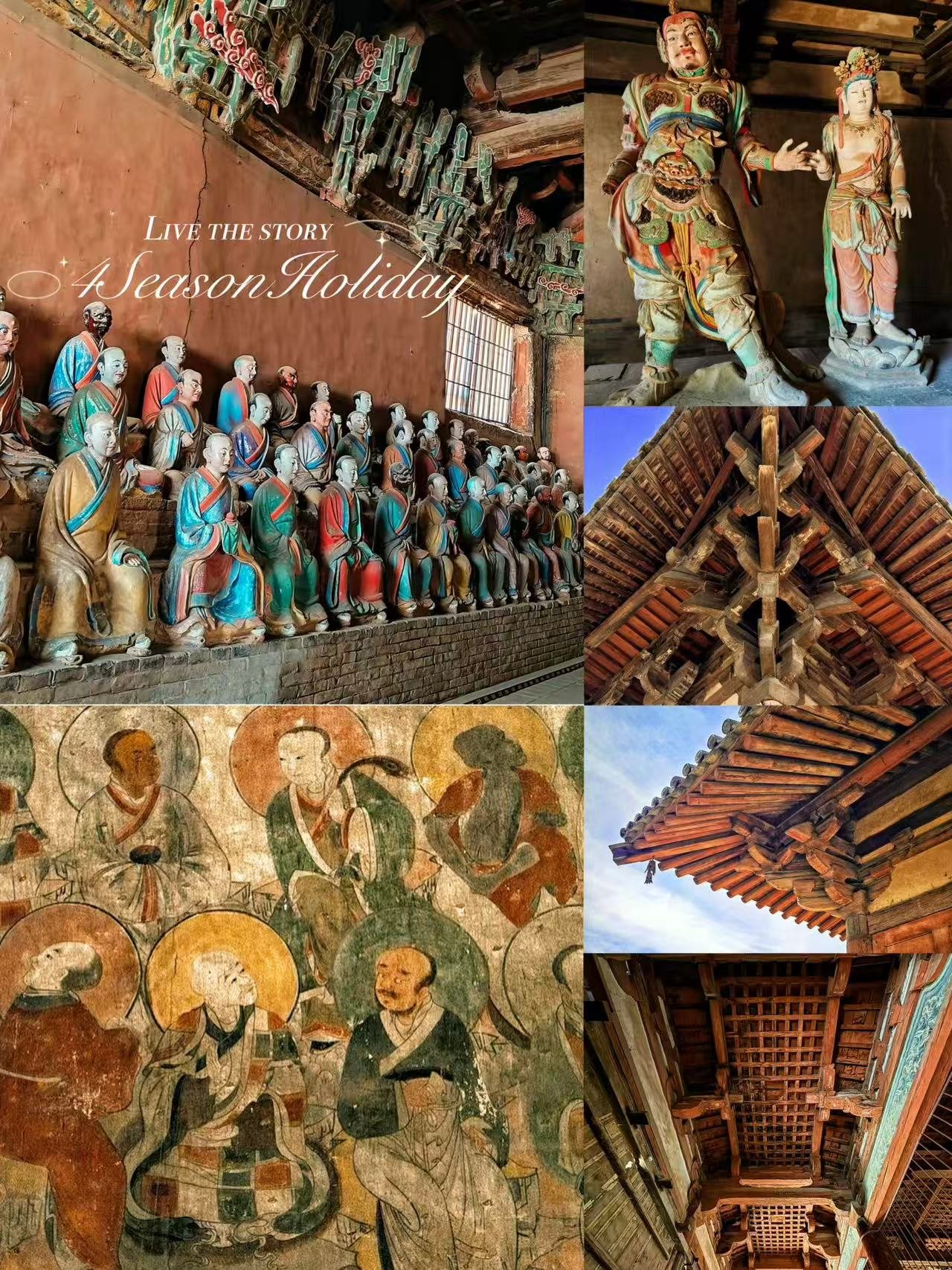
Morning: Nanchan Temple (782 AD) - oldest preserved wooden building in China, featuring elegant eave curves, simple yet robust bracket sets, and original Tang clay sculptures in the main hall.
Afternoon: Foguang Temple (857 AD) - the "Great Buddha Hall" with its soaring bracket complexes, intricate caisson ceilings, rare Tang dynasty murals, and the iconic "Foguang Esoteric" architectural layout.
Architectural Significance:
These temples represent the peak of Tang Buddhist architecture
Cultural Treasures & Ancient Gardens
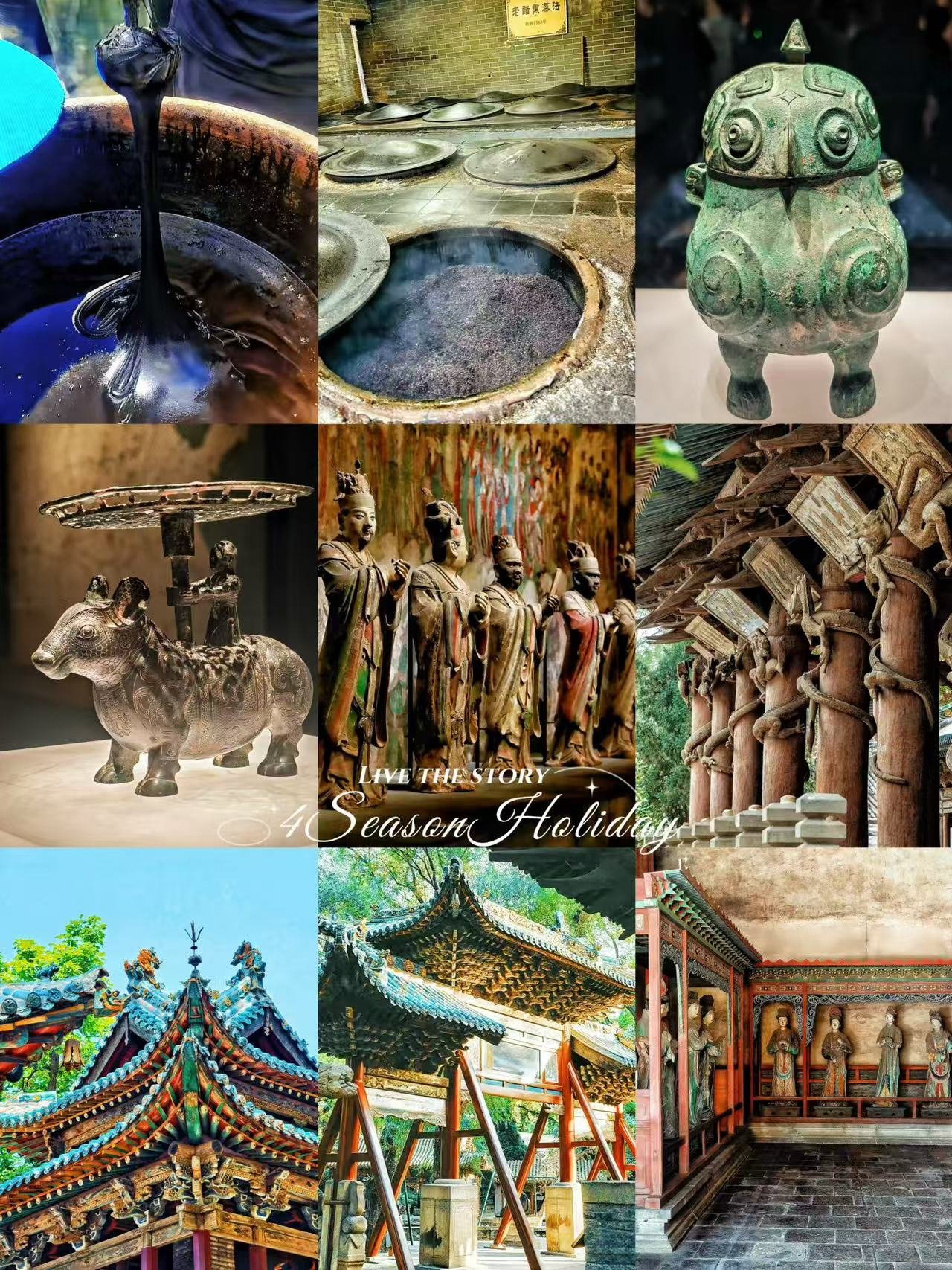
Morning: Jinci Temple - Song Dynasty (960-1279 AD) masterpiece with magnificent hall, along with the timeless Zhou Cypress dating back 3,000 years and the ever-flowing Nanlao Spring. Donghu Vinegar Garden (founded 1368) - China's oldest vinegar workshop, brewing techniques have been preserved for over 600 years.
Afternoon Options:
Shanxi Museum - comprehensive collection of provincial treasures. The museum's Buddhist sculpture collection spans 1,500 years
Evening: Traditional noodle-making workshop with master chef
Culinary Skill:
Learn to make knife-cut noodles - a Shanxi specialty
Local Taste:
Don't miss the opportunity to sample various aged vinegar and the unexpectedly delicious vinegar-flavored ice cream.
UNESCO Ancient City & Sculpture Art
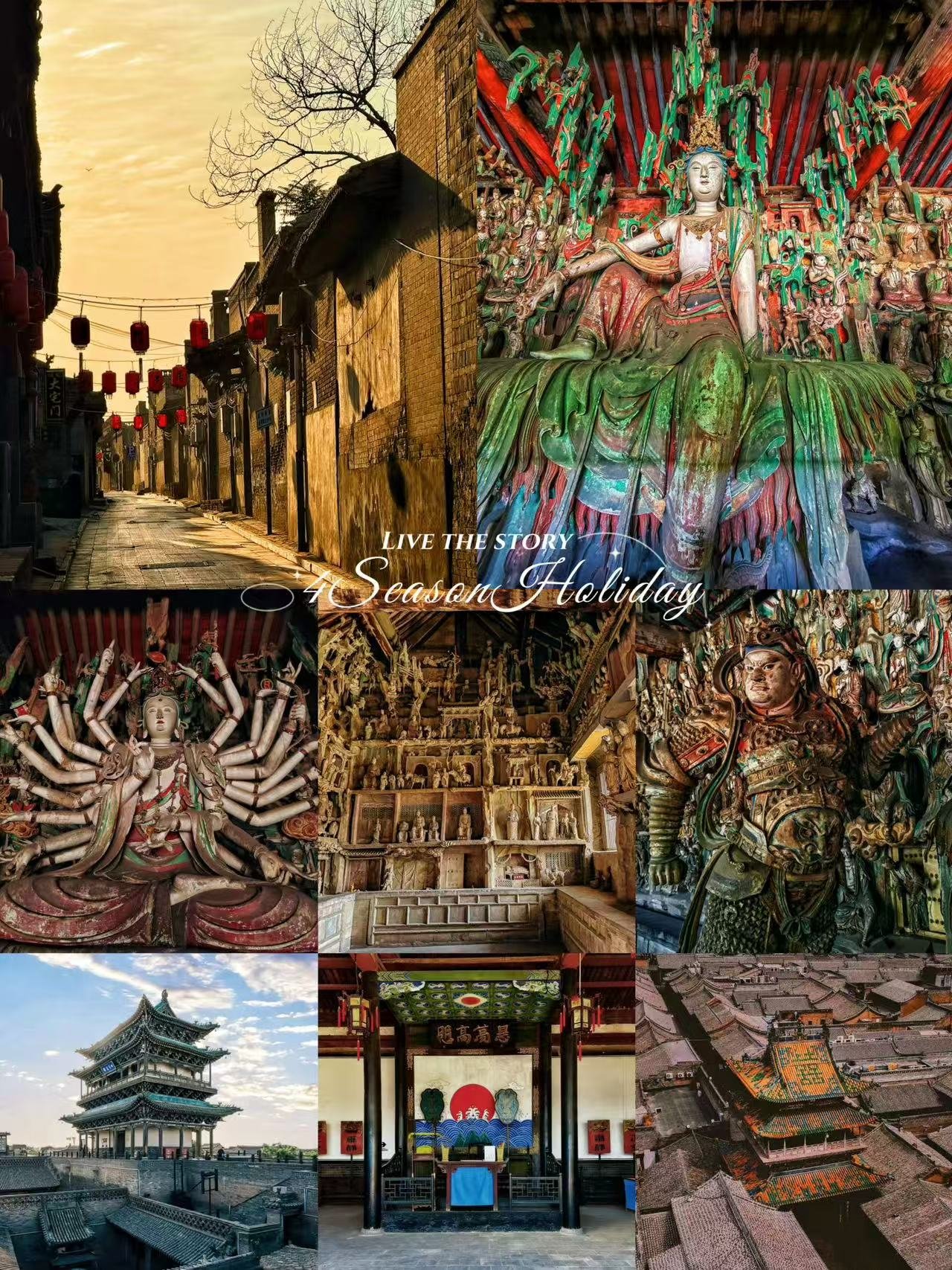
Morning: Shuanglin Temple (Northern Song to Ming Dynasty, 960-1644) - renowned "Sculpture Art Gallery" with over 2,000 exquisitely painted clay statues.
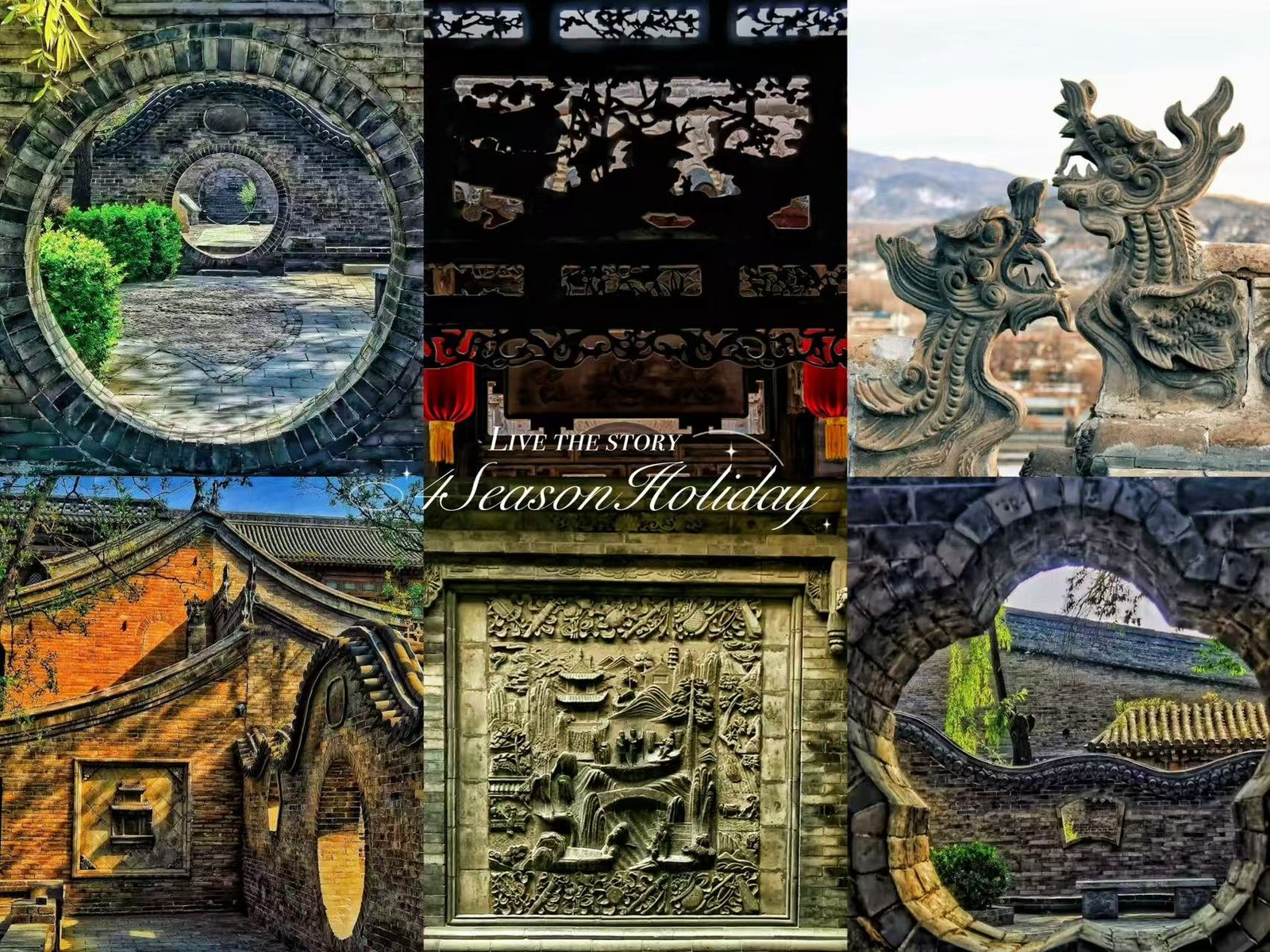
Afternoon: Pingyao Ancient City (Ming-Qing Dynasty, 14th-20th century) - walk along the well-preserved Ming-Qing Street, exploring traditional courtyard residences, historic shopfronts, and the iconic Ancient City Walls.
Evening: Shadow puppetry workshop with local masters
Cultural Experience:
The illuminated ancient streets, shadow puppet performances, and local snacks create a captivating evening ambiance in Pingyao. The Shengtang (升堂) show reenacts ancient court proceedings

Ancient Temples & Grand Residences
Morning: Zhenguo Temple (Five Dynasties Period, 907-960 AD) - featuring the Ten-Thousand Buddha Hall, one of China's oldest and best-preserved wooden structures, housing exquisite colored clay sculptures from the 10th-12th centuries.
Afternoon: Wang Family Compound (constructed 1762-1811) - explore this massive architectural complex covering 150,000 square meters with 231 courtyards, showcasing the pinnacle of Qing Dynasty (1644-1912) residential architecture with its intricate wood carvings, stone decorations, and distinctive siheyuan courtyard layouts.
Evening: Traditional courtyard hotel check-in in ancient city
Cultural Insight:
The Wang family's rise from farmers to wealthy merchants reflects the economic prosperity of Shanxi merchants during the Ming (1368-1644) and Qing (1644-1912) dynasties.
Glazed Pagoda & Celestial Murals
Morning: Guangsheng Temple (Eastern Han Dynasty, 25–220 AD)
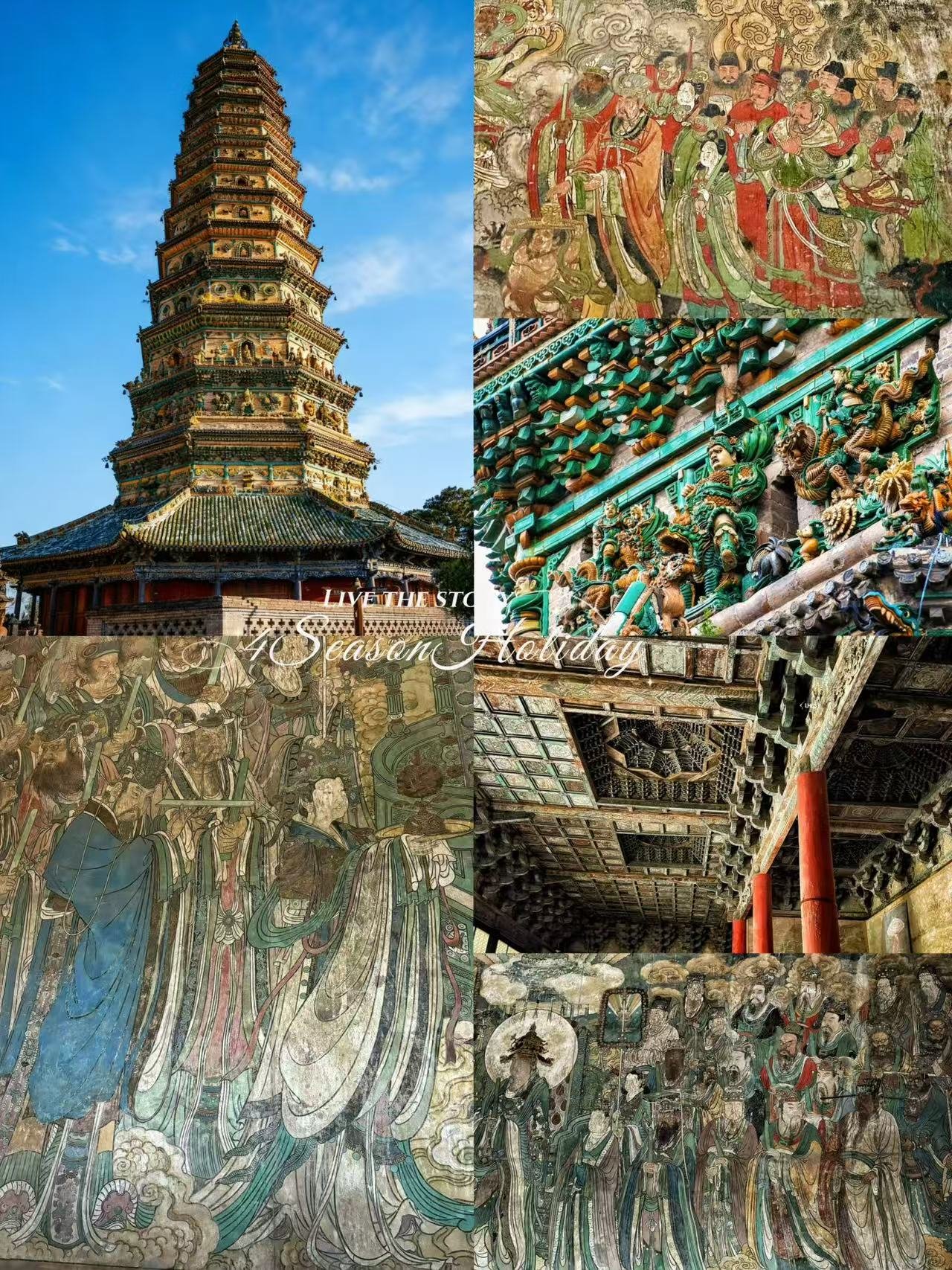
Admire the stunning Feihong Pagoda (built 1515, Ming Dynasty), a 13-story glazed masterpiece shimmering with vibrant ceramics, and explore the Water God Temple with its rare Yuan Dynasty (1271–1368) murals depicting dramas of daily life and rituals.
Afternoon: Yongle Palace (Yuan Dynasty, 1271–1368)
Enter the UNESCO-listed Taoist complex to witness the breathtaking "Court Assemblage Diagram" (Chaoyuan Tu) – a monumental mural spanning 400 square meters, portraying nearly 300 deities in flowing robes.
Must Try:
Don't miss the chance to try "Yellow River Carp" – a local specialty fish dish, best paired with Shanxi's famous vinegar.
Thundering Waterfalls & Exquisite Sculptures
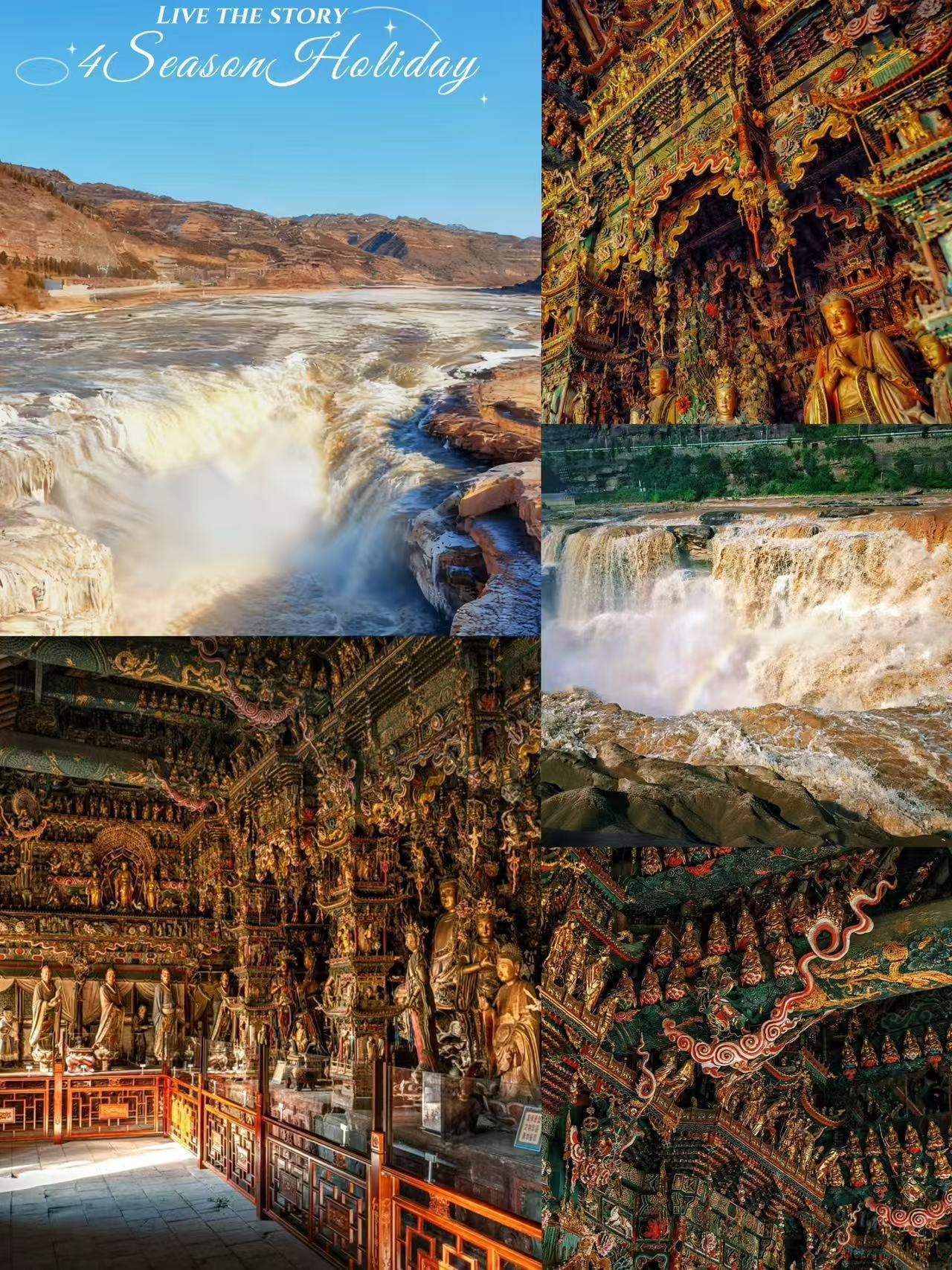
Morning: Yellow River Hukou Waterfall - experience the spectacular meeting point of Shanxi and Shaanxi provinces where the Yellow River plunges 20 meters into a narrow gorge, creating rainbows in the mist and thunderous echoes (best flow: April-October).
Afternoon: Xiaoxitian Temple (Ming Dynasty, 1624-1644) - discover the "Phoenix's Crown of Ancient Chinese Sculpture" featuring thousands of exquisite colored clay statues, gilded wood carvings, and intricate ceiling mandalas in the Daxiong Hall.
Must Try:
Authentic Yellow River fish dinner
Departure Day
Morning: Ride a high-speed rail back to Taiyuan or other cities.

Member Since 2025
 EN_US
EN_US ES
ES